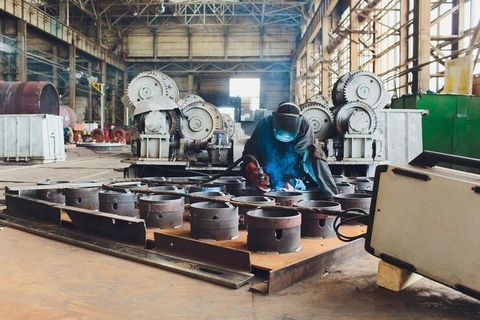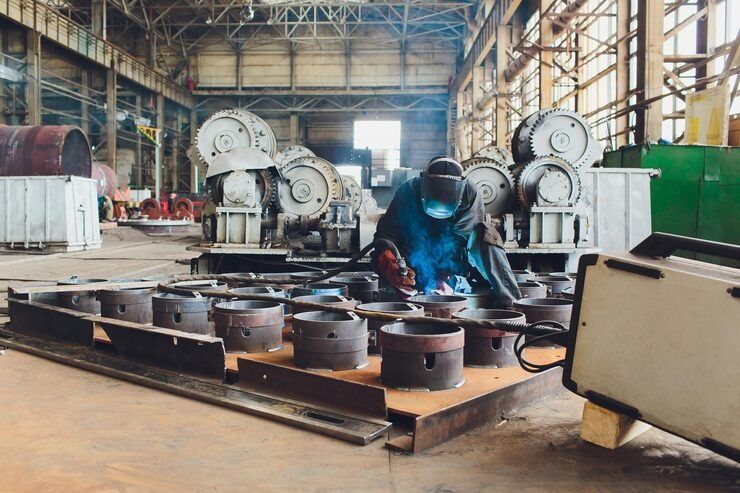
Metal extrusion plants depend on carefully coordinated machinery to transform heated or prepared metal billets into profiles with controlled dimensions and consistent properties.
The equipment selected for an extrusion line affects material handling, forming accuracy, cooling, cutting, inspection, and overall plant workflow.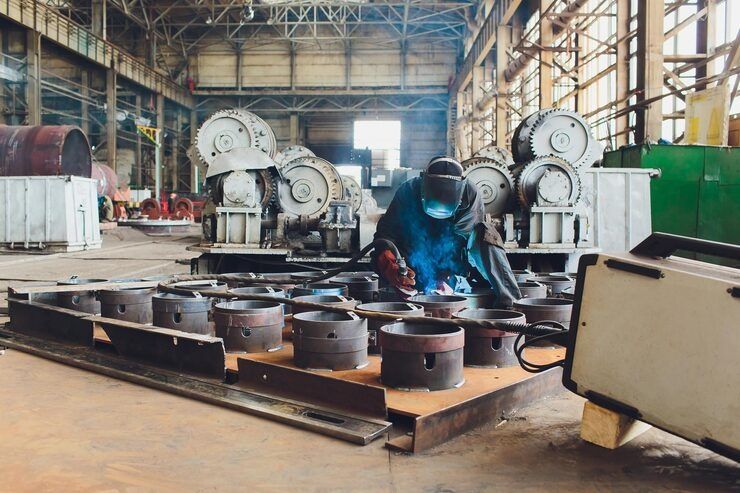
Modern metal extrusion plant machinery vendors typically support different stages of the production process rather than supplying one isolated machine. Depending on the material and profile requirements, a plant may include billet heating systems, extrusion presses, die-handling equipment, quenching systems, pullers, runout tables, saws, aging furnaces, and automated material-handling equipment.
Understanding these equipment categories makes it easier to evaluate an extrusion plant as an integrated production system. It also helps plant engineers identify where automation, process control, energy management, and quality monitoring can improve day-to-day operations.
Start With the Extrusion Process, Not the Equipment List
The right machinery depends heavily on what the plant produces. Aluminum profiles, copper products, brass sections, and other extruded metals can require different temperatures, extrusion pressures, tooling arrangements, and cooling methods.
A typical direct extrusion process begins with billet preparation and heating. The heated billet is positioned in an extrusion press, where a ram pushes the material through a shaped die. The resulting profile then passes through downstream equipment for cooling, straightening, cutting, inspection, and further treatment.
Because these stages are connected, equipment should be considered as a production line rather than a collection of independent machines. A high-capacity press, for example, may create a bottleneck if the downstream cooling, handling, or cutting equipment cannot maintain the required throughput.
This is why plant planning generally begins with production requirements such as:
- Metal alloy and billet dimensions
- Profile geometry and cross-sectional area
- Required production volume
- Extrusion speed and pressure requirements
- Product length and dimensional tolerances
- Cooling and heat-treatment requirements
- Desired level of automation
These parameters provide the foundation for evaluating machinery configurations.
Billet Heating Systems Set Upstream Conditions
Billet heating is one of the first critical stages because extrusion performance depends on the material reaching an appropriate and controlled temperature.
Modern heating systems may use gas-fired furnaces, induction heating, or other thermal technologies. The choice depends on the metal, billet dimensions, production rate, temperature-control requirements, and plant configuration.
Temperature uniformity matters as much as the target temperature itself. Uneven heating can influence material flow through the die and contribute to variations in surface quality, dimensional consistency, or extrusion behavior.
Contemporary systems can incorporate temperature sensors, programmable controls, automated billet loading, and process monitoring. These features allow operators to maintain more consistent thermal conditions while reducing unnecessary manual intervention.
Extrusion Presses Remain the Core Forming Equipment
The extrusion press is the central machine in a conventional extrusion line. Its primary function is to force the billet through the die under controlled mechanical pressure.
Presses differ substantially in capacity, configuration, automation, and control systems. Selection should reflect the material being processed and the characteristics of the intended profiles rather than relying solely on nominal press capacity.
Important considerations include ram force, container dimensions, billet diameter, maximum extrusion speed, tooling configuration, and control precision. Hydraulic presses remain widely used, while modern systems can incorporate sophisticated hydraulic, electrical, and computerized controls.
Process monitoring can track variables such as pressure, ram position, speed, and temperature. Consistent control of these parameters helps operators identify deviations during production and maintain repeatable extrusion conditions.
Downstream Equipment Determines How Profiles Are Finished
Once a profile leaves the die, the extrusion line continues through several important operations. The exact configuration varies according to the product, but cooling, pulling, handling, straightening, cutting, and inspection are common elements.
Runout tables provide a controlled surface for the emerging profile while allowing it to cool and move through the line. Pullers maintain controlled movement and help stabilize the profile as it exits the press.
For products that require improved straightness, stretching or straightening equipment can be integrated into the downstream process. Cutting systems then divide continuous extrusions into specified lengths.
The relationship between these machines matters. If a puller operates inconsistently or a cutting system cannot keep pace with the press, the resulting production interruptions can affect the entire line.
Cooling and Heat Treatment Require Controlled Conditions
Cooling requirements depend on the alloy and the properties expected from the finished profile. Some extrusion lines use air cooling, while others incorporate water-based quenching systems or controlled combinations of cooling methods.
The cooling stage can influence mechanical properties and dimensional stability. Consequently, cooling equipment must provide consistent conditions across the profile rather than simply removing heat as quickly as possible.
Some products subsequently require artificial aging or other heat-treatment processes. Aging furnaces can maintain controlled temperatures for specified periods, allowing the material to develop the required metallurgical characteristics.
Temperature uniformity, airflow, loading arrangements, and monitoring systems are therefore relevant when assessing heat-treatment equipment.
Automation Is Changing Modern Extrusion Plant Layouts
Automation increasingly connects individual machines into coordinated production systems. Instead of relying entirely on manual movement between process stages, modern plants can use automated billet loaders, robotic handling systems, transfer mechanisms, programmable controls, and production monitoring platforms.
Automation can improve consistency by reducing variations associated with repetitive manual operations. It can also provide better production visibility, particularly when equipment is connected to a centralized control or manufacturing information system.
Common automation areas include:
- Billet loading and transfer
- Die handling
- Profile movement between stations
- Automatic cutting
- Defect detection and inspection
- Production data collection
- Equipment condition monitoring
However, automation should match the plant's actual operating requirements. Highly automated machinery can add complexity, so integration, maintenance access, operator training, and compatibility with existing equipment need careful consideration.
How to Evaluate Metal Extrusion Plant Machinery Vendors
When comparing metal extrusion plant machinery vendors, technical specifications are only one part of the evaluation. The vendor's ability to understand the complete production process is equally relevant.
A useful evaluation begins with whether the proposed machinery matches the alloy, profile dimensions, production requirements, and planned operating conditions. Equipment compatibility is particularly important when several machines are expected to work as one continuous line.
Engineering documentation and technical support should also be examined. Plant operators may need information covering installation, commissioning, controls, maintenance intervals, spare components, troubleshooting, and safety procedures.
Other practical considerations include:
- Equipment integration capabilities
- Control-system architecture
- Availability of technical documentation
- Operator training requirements
- Maintenance accessibility
- Spare-component planning
- Safety-system integration
- Compatibility with future plant modifications
A vendor that supplies one machine may still need to coordinate with other equipment manufacturers. Clear interface specifications help prevent problems during installation and commissioning.
Energy Efficiency and Process Monitoring Matter at Plant Scale
Energy consumption is a significant operational consideration in metal processing because heating, extrusion, cooling, and heat treatment all require substantial energy input.
Modern equipment may incorporate variable-speed drives, improved furnace insulation, heat recovery, optimized hydraulic systems, and automated operating controls. The actual improvement depends on plant configuration and operating practices, so efficiency claims should be evaluated against measurable operating conditions.
Process monitoring provides another route to better plant control. Sensors can collect information about temperature, pressure, speed, energy consumption, and equipment status.
When these data are organized effectively, engineers can identify process variation and investigate recurring production problems. Predictive maintenance systems can also use equipment-condition data to identify developing issues before they cause an unexpected interruption.
Safety and Maintainability Should Be Part of Equipment Selection
Extrusion plants combine high temperatures, powerful hydraulic systems, moving machinery, heavy billets, sharp profiles, and automated equipment. Machinery selection therefore needs to account for operator safety as well as production performance.
Safety systems may include guarding, emergency stops, interlocks, controlled access areas, thermal protection, and appropriate material-handling arrangements. Equipment should also support safe inspection and maintenance activities.
Maintainability is equally important. Components that are difficult to access can increase downtime during routine servicing. Clear maintenance procedures, diagnostic information, and accessible service points can make a substantial difference to long-term plant operation.
The applicable machinery and workplace safety requirements depend on the jurisdiction and plant configuration. Engineering teams should verify relevant standards and regulatory requirements during system design and commissioning.
Planning a Modern Extrusion Line as an Integrated System
A modern extrusion plant works best when equipment decisions are made around the complete production flow. Billet heating, pressing, cooling, pulling, cutting, handling, inspection, and heat treatment must operate at compatible rates.
The physical layout also deserves careful attention. Material should move logically through the plant without unnecessary transfers, congestion, or conflicting traffic paths. Space for maintenance, tooling changes, storage, and future modifications should be considered during planning.
The most useful approach is therefore to define production requirements first and then map the machinery needed at every stage. This creates a clearer basis for discussions with metal extrusion plant machinery vendors and helps engineers compare equipment based on actual process requirements rather than isolated specifications.
Frequently Asked Questions
What machinery is commonly used in a metal extrusion plant?
A typical line can include billet heating equipment, an extrusion press, die-handling systems, runout tables, cooling equipment, pullers, straightening equipment, cutting machines, inspection systems, and heat-treatment furnaces.
Why is billet temperature control important?
Consistent billet temperature affects material flow, extrusion behavior, surface quality, and dimensional consistency. Uneven heating can create process variation and make stable production more difficult.
What role does automation play in extrusion plants?
Automation can coordinate material handling, machine controls, cutting, inspection, and production data collection. Its value depends on how well the systems are integrated with the plant's actual production requirements.
How should extrusion machinery vendors be evaluated?
Evaluation should consider equipment capability, process compatibility, controls, integration, documentation, maintenance access, technical support, safety provisions, and the ability to accommodate future plant requirements.
Is the extrusion press the only major machine to consider?
No. The press is central to forming, but downstream equipment can strongly influence throughput, product quality, cooling, dimensional control, handling, and overall production continuity.
Conclusion
Modern metal extrusion plants rely on coordinated equipment across the entire production sequence. The extrusion press is central, but billet heating, cooling, handling, cutting, heat treatment, automation, and inspection all contribute to the finished product.
Selecting machinery is therefore less about identifying individual machines and more about designing a compatible production system. By defining material, profile, throughput, quality, automation, safety, and maintenance requirements first, plant teams can evaluate equipment options and vendor capabilities with greater technical clarity.