A commercial laser cutting machine has become an important part of modern metal fabrication, industrial manufacturing, and precision processing.
By directing a concentrated laser beam onto a material, these systems can produce controlled cuts with consistent geometry across a wide range of production tasks.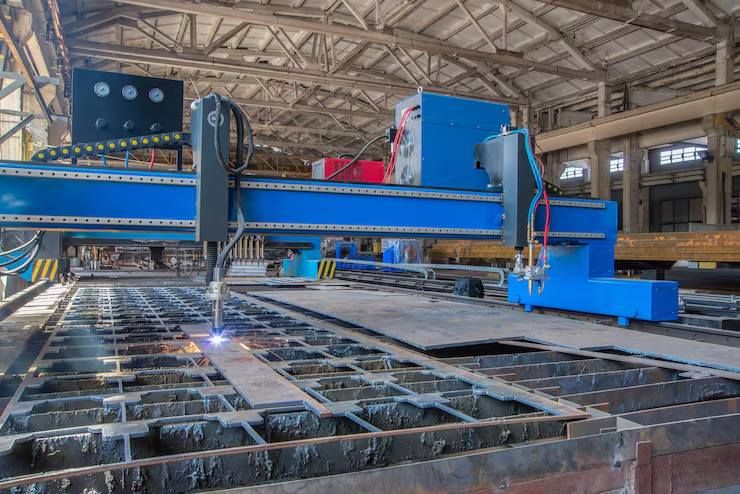
The technology is particularly relevant where accuracy, repeatability, edge quality, and production throughput need to work together. Improvements in laser sources, motion systems, automation, and computer-controlled manufacturing have expanded how cutting equipment can be integrated into industrial workflows.
Understanding cutting performance requires more than looking at laser power alone. Material type, thickness, beam quality, assist gas, focusing, motion control, thermal management, and machine configuration all influence the final result. These factors explain why two machines with similar power ratings can produce different outcomes.
How Laser Cutting Produces Precision
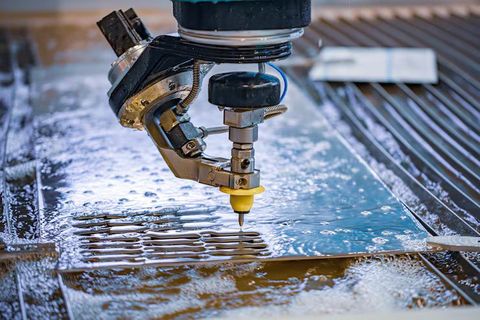
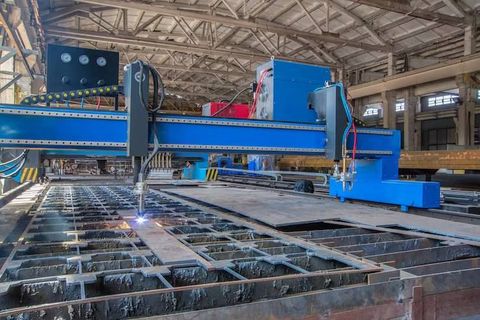
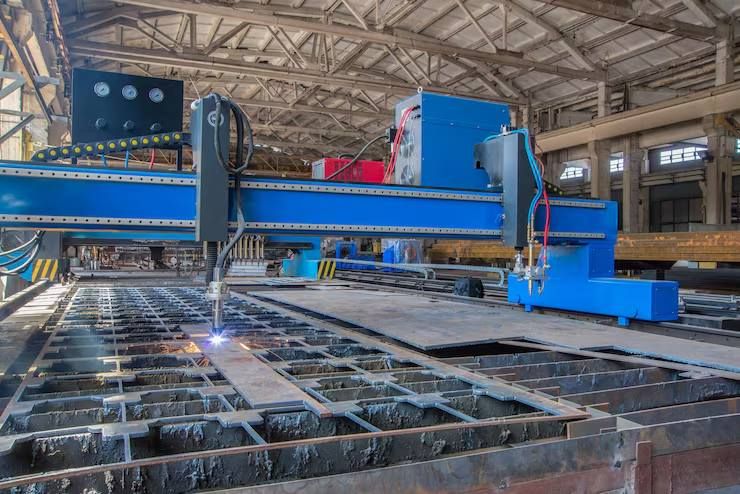
Laser cutting uses a focused beam of light to generate enough energy in a small area to melt, burn, or vaporize material. A cutting head moves along a programmed path while an assist gas helps remove molten material from the cut zone.
The process is controlled through computer-aided manufacturing software. A digital design is converted into machine instructions that determine the cutting path, movement speed, power behavior, and other process parameters.
The narrow interaction zone is one reason laser cutting can achieve detailed geometries. Compared with many conventional cutting processes, the heat-affected region can be relatively limited when the process is correctly configured.
Precision, however, depends on the complete system. Mechanical rigidity, positioning accuracy, calibration, optics, software control, and material handling all contribute to the final dimensional result.
Fiber, CO₂, and Other Laser Configurations
The laser source influences how a machine interacts with different materials. Fiber lasers are widely used for metal processing because their wavelength is efficiently absorbed by many commonly processed metals.
CO₂ laser systems have historically been used across industrial cutting applications, including certain nonmetal materials and thicker processing requirements. Their optical architecture differs from fiber systems, which affects maintenance requirements and application suitability.
The appropriate configuration depends on the production environment rather than on a single specification. Material composition, thickness range, required geometry, production volume, and desired edge characteristics should all be considered together.
For this reason, comparing machines solely by nominal laser power can produce an incomplete picture of actual cutting performance.
What Determines Cutting Performance?
Laser power provides an important reference point, but it is only one part of the cutting equation. A commercial system must coordinate several variables to achieve reliable results.
Material and Thickness
Different materials respond differently to laser energy. Mild steel, stainless steel, aluminum, copper, brass, and other alloys have distinct thermal and optical properties.
Thickness also changes the process requirements. As material becomes thicker, maintaining a clean kerf and stable cutting process can require different power levels, focal settings, feed rates, and assist-gas conditions.
Thin-sheet processing often emphasizes speed and fine detail, while thicker materials may place greater demands on penetration and thermal control.
Beam Quality and Focusing
The laser beam must be delivered and focused accurately at the cutting surface. Beam characteristics influence energy concentration and therefore affect the cutting zone.
A properly adjusted focus can help produce a narrow kerf and consistent edge geometry. Incorrect focusing can contribute to incomplete penetration, excessive heat, rough edges, or dimensional variation.
The cutting head therefore plays a critical role in translating laser energy into a controlled manufacturing process.
Assist Gas
Assist gas performs several functions during laser cutting. It can help remove molten material from the kerf, influence oxidation, and affect the appearance and quality of the finished edge.
Oxygen, nitrogen, and compressed air may be used depending on the material and process objective. Gas selection and pressure must be matched to the application because the wrong combination can increase dross or alter the cut edge.
The gas delivery system must also maintain stable flow throughout the cutting operation.
Motion Control and Machine Accuracy
A laser can generate a highly concentrated beam, but precision also depends on how accurately the cutting head moves.
The machine's drive system, guideways, motors, feedback mechanisms, and structural frame determine how closely actual movement follows the programmed path. Mechanical vibration or insufficient rigidity can become visible in detailed parts, especially at higher cutting speeds.
Modern CNC laser systems coordinate motion across multiple axes. Acceleration and deceleration behavior also matters because abrupt changes can affect corners, small features, and intricate contours.
Good motion control is therefore not simply about achieving high travel speed. It is about maintaining controlled movement while preserving dimensional accuracy throughout the cutting path.
Automation and Production Workflow
Commercial laser cutting equipment is increasingly integrated into broader manufacturing workflows. Automated material handling, sheet loading, unloading, nesting software, and production monitoring can reduce manual intervention between cutting cycles.
Nesting software can arrange multiple parts efficiently on a sheet, helping manufacturers organize material usage and reduce unnecessary movement. Automated systems can also support repeat production by maintaining consistent machine parameters across batches.
Integration with manufacturing execution systems and other digital production tools can provide additional visibility into machine status, scheduling, maintenance, and production data.
However, automation is most effective when the underlying cutting process is already stable. Automating an inconsistent process does not automatically make the resulting parts consistent.
Edge Quality and Dimensional Accuracy
The appearance and geometry of a finished cut provide useful indicators of process performance. A well-controlled process can produce relatively smooth edges with limited dross and predictable dimensions.
Several characteristics may be evaluated during quality inspection:
- Kerf width and consistency
- Edge roughness
- Dross formation
- Heat-affected areas
- Hole geometry
- Corner accuracy
- Dimensional tolerance
- Surface discoloration or oxidation
The appropriate quality criteria depend on the final application. A structural component may have different requirements from a precision enclosure or decorative metal panel.
Quality inspection should therefore be connected to actual engineering requirements rather than relying only on visual appearance.
Managing Heat During Cutting
Although laser cutting concentrates energy into a small area, thermal effects remain important. Excessive heat can influence material distortion, particularly when processing thin sheets or complex patterns with many closely spaced features.
Cutting sequence can help manage this effect. Software may arrange the order of individual cuts so that heat does not accumulate excessively in one region.
Workholding and material support can also affect stability. When the sheet moves or deforms during processing, the distance between the cutting head and material surface may change, potentially affecting the process.
Thermal management is therefore part of both machine setup and programming strategy.
Maintenance and Calibration
Precision cannot be maintained indefinitely without routine machine care. Optical components, cutting heads, filters, cooling systems, motion components, and gas-delivery equipment all require appropriate inspection or maintenance.
Calibration is equally important. A machine may continue operating while gradually developing positioning or process inconsistencies that are difficult to identify without systematic checks.
Operators should follow the manufacturer's maintenance procedures and establish inspection routines appropriate to machine utilization. Monitoring changes in edge quality and dimensional accuracy can also help identify developing problems before they affect larger production batches.
Choosing a Machine Around the Application
Selecting commercial laser cutting equipment should begin with the materials and production requirements rather than a single headline specification.
Important considerations include:
- Material types and thickness ranges
- Required dimensional accuracy
- Typical part geometry
- Production volume
- Desired cutting speed
- Sheet or workpiece dimensions
- Automation requirements
- Software compatibility
- Maintenance capabilities
- Available facility infrastructure
A machine optimized for high-volume sheet-metal production may not be the appropriate configuration for a workshop focused on intricate components or specialized materials.
The objective is to match the complete machine architecture with the manufacturing process.
Common Questions About Commercial Laser Cutting Machines
Does higher laser power always mean better cutting performance?
No. Laser power affects cutting capability, but performance also depends on beam quality, material properties, focus, assist gas, cutting speed, motion control, and machine configuration.
Which materials can commercial laser cutting machines process?
Capabilities vary by laser source and machine configuration. Common applications include carbon steel, stainless steel, aluminum, brass, copper, and other engineered materials. The manufacturer's approved material range should always be checked.
Why does edge quality vary between cutting jobs?
Edge quality can change because of material thickness, focus position, cutting speed, power settings, assist gas, nozzle condition, and material characteristics. Process optimization is usually required for each material and thickness combination.
Is automation necessary for precision laser cutting?
No. Automated systems can improve workflow consistency and throughput, but precision fundamentally depends on machine construction, calibration, process control, programming, and appropriate operating parameters.
Conclusion
Commercial laser cutting machines combine concentrated laser energy, precision motion control, computer programming, and process management to produce repeatable cuts across demanding manufacturing applications. Their performance depends on the interaction of the entire system rather than laser power alone.
Material characteristics, beam focusing, assist gas, machine rigidity, thermal behavior, automation, calibration, and maintenance all influence the final result. Understanding these factors makes it easier to evaluate cutting performance based on real manufacturing requirements rather than isolated specifications.