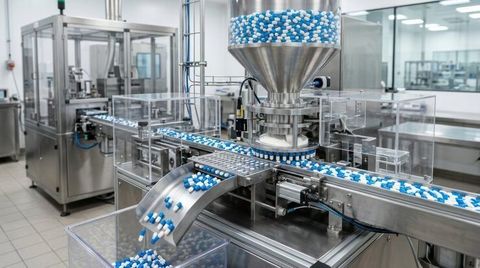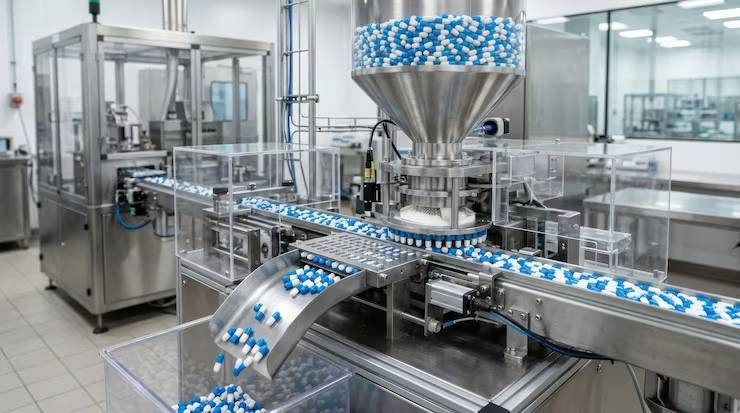
Pharmaceutical manufacturing machinery forms the backbone of modern drug production, from material preparation and blending to tablet compression, filling, packaging, and quality control.
Each machine must work reliably within a carefully controlled process because equipment performance can directly affect product consistency and manufacturing efficiency.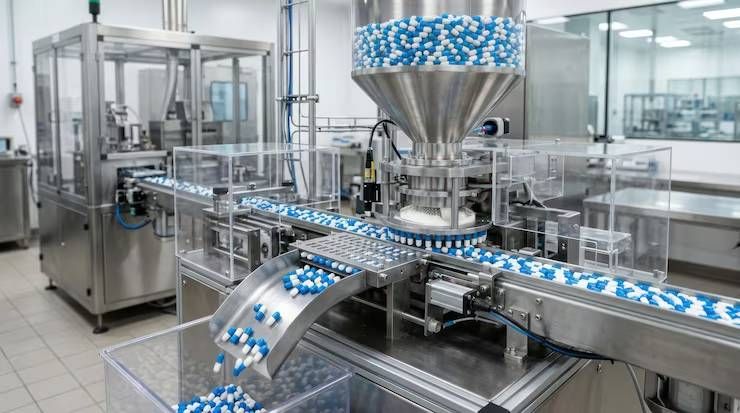
As pharmaceutical production becomes more specialized, equipment selection involves more than matching a machine to a single operation. Manufacturers must consider dosage forms, production volumes, material characteristics, cleaning requirements, containment, automation, validation, and regulatory expectations.
Choosing the right equipment therefore requires a process-based approach. Understanding how each machine fits into the manufacturing workflow can help production teams evaluate technical requirements, identify compatibility issues, and build an equipment setup that supports consistent pharmaceutical production.
Start With the Manufacturing Process
The right equipment begins with a clear understanding of the process rather than the machine itself. A manufacturer should first map how raw materials move through each production stage and identify the operating conditions required at every step.
For solid dosage forms, the process may include dispensing, milling, granulation, drying, blending, tablet compression, coating, inspection, and packaging. Liquid products can require mixing, homogenization, filtration, filling, and sealing, while sterile products introduce additional requirements for aseptic processing and contamination control.
Each stage places different demands on machinery. A high-shear granulator, for example, performs a very different function from a fluid-bed dryer or tablet press. Selecting equipment based only on general capacity can overlook critical process requirements.
Match Equipment to the Dosage Form
Dosage form is one of the first technical factors to consider. Tablets, capsules, liquids, creams, ointments, powders, and sterile preparations each require specialized processing equipment.
For tablet production, machinery may include:
- Pulverizers and mills for particle-size reduction
- Granulators for improving powder characteristics
- Blenders for achieving uniform mixtures
- Tablet presses for compression
- Coating systems for applying functional or protective layers
Capsule manufacturing may require powder or granule filling systems, capsule handling equipment, and inspection systems. Liquid formulations often depend on mixing vessels, agitators, homogenizers, pumps, filtration units, and filling machines.
The equipment should therefore be evaluated according to the physical and chemical characteristics of the formulation. Particle size, viscosity, moisture content, flowability, sensitivity to heat, and potential interaction with equipment surfaces can all influence the appropriate machinery configuration.
Evaluate Production Capacity and Scale
Capacity should reflect both current production requirements and realistic operational plans. A machine that is significantly oversized can introduce unnecessary complexity, while undersized equipment may create bottlenecks as production demand increases.
Manufacturers should consider more than the stated maximum capacity. Actual throughput can be affected by loading and unloading time, cleaning cycles, changeovers, equipment configuration, operator procedures, and process conditions.
Batch size is another important consideration. Equipment used for development or small-scale production may need different operating characteristics from machinery intended for continuous commercial manufacturing.
A useful evaluation looks at the complete production cycle rather than asking only how much material a machine can process in one run.
Consider Materials and Product Characteristics
Pharmaceutical materials can behave very differently during processing. Powders may have poor flowability, electrostatic properties, or sensitivity to moisture. Some active ingredients may require specialized containment because even small quantities can present occupational or cross-contamination concerns.
Equipment selection should account for factors such as:
- Material density and flow characteristics
- Moisture and temperature sensitivity
- Abrasiveness
- Particle-size requirements
- Product viscosity
- Chemical compatibility
- Potency and containment requirements
These characteristics influence contact surfaces, seals, mixing mechanisms, filtration arrangements, and material-handling systems.
For example, a formulation containing highly potent compounds may require contained transfer and processing arrangements that would not be necessary for a conventional low-risk formulation.
Prioritize Hygienic and Cleanable Design
Pharmaceutical equipment must support controlled manufacturing conditions. Product-contact surfaces should be designed to minimize contamination risks and allow effective cleaning.
Equipment geometry matters because difficult-to-access areas, unnecessary crevices, dead zones, and poorly designed connections can make cleaning more difficult. Smooth product-contact surfaces and appropriate construction materials can simplify cleaning and inspection.
Cleaning requirements should be considered before equipment is selected. Some systems are designed for manual cleaning, while others may incorporate clean-in-place or automated cleaning arrangements.
The choice depends on the product, facility, production scale, contamination risks, and validated cleaning strategy. A machine that performs well during production but creates significant cleaning difficulties can become a process constraint.
Examine Automation and Process Control
Automation can improve repeatability by controlling operating parameters such as temperature, pressure, mixing speed, processing time, and material flow. However, automation should be selected according to actual process requirements rather than added simply for technological sophistication.
A controlled system can reduce manual intervention and help operators maintain defined process conditions. Integrated sensors and data collection can also support process monitoring and documentation.
For pharmaceutical manufacturing, electronic controls may need appropriate access management, audit trails, data integrity measures, and system validation depending on their role in regulated operations.
The most useful automation is therefore closely connected to the critical process parameters that influence product quality.
Check Validation and Regulatory Requirements
Pharmaceutical machinery operates within a regulated environment, making qualification and validation important parts of equipment selection.
Equipment qualification commonly involves activities such as design qualification, installation qualification, operational qualification, and performance qualification, depending on the equipment and applicable quality system.
Documentation should support the manufacturer's ability to demonstrate that the equipment has been installed correctly, operates as intended, and performs consistently under defined conditions.
Documentation may include equipment specifications, material certificates, operating instructions, drawings, maintenance information, calibration records, and qualification documentation.
Selecting equipment with incomplete or inadequate documentation can create complications later during qualification and regulatory inspections.
Assess Containment and Cross-Contamination Risks
Containment becomes particularly important when manufacturing multiple products within the same facility. Powder transfer, milling, blending, compression, and other operations can generate airborne particles that require appropriate controls.
Equipment design should therefore be evaluated alongside the facility's containment strategy. Closed transfers, isolators, contained discharge systems, dust extraction, pressure differentials, and specialized filtration may all play a role depending on the material and process.
Cross-contamination prevention is not solely an equipment issue. It involves facility layout, material movement, personnel practices, cleaning procedures, environmental controls, and production scheduling.
The machinery must fit into that larger control strategy.
Look Beyond Initial Equipment Selection
A pharmaceutical machine is part of a long operating lifecycle. Maintenance, spare parts, calibration, technical support, changeover requirements, and operator training can significantly influence how practical the equipment is over time.
Maintenance access deserves particular attention. Components that require frequent inspection or replacement should be accessible without creating unnecessary production disruption.
Changeover time is another consideration when multiple products or batch configurations use the same equipment. Equipment that can be dismantled, cleaned, inspected, and reassembled efficiently may support smoother production scheduling.
Operator training also matters. Sophisticated machinery can introduce additional control functions, but those functions are useful only when personnel understand how to operate and maintain the system correctly.
Build a Structured Equipment Evaluation
A structured evaluation can make equipment selection more consistent. Instead of focusing on a single specification, pharmaceutical manufacturers can compare machines across several categories.
Key evaluation areas include:
- Process compatibility
- Capacity and throughput
- Product-contact materials
- Cleaning and sanitation
- Containment requirements
- Automation and controls
- Validation documentation
- Maintenance access
- Changeover requirements
- Integration with upstream and downstream equipment
This approach helps reveal trade-offs that may not be obvious from a machine's basic specifications.
For example, two machines may have similar processing capacities but differ considerably in cleaning design, containment, automation, or maintenance requirements. Those differences can influence the suitability of the equipment within an actual pharmaceutical production environment.
Consider the Complete Production Line
Individual machines should not be evaluated in isolation. Pharmaceutical manufacturing is a connected process, and poor integration between equipment can create delays or quality risks.
Material transfer between stages should be examined carefully. The output characteristics of one machine must be compatible with the requirements of the next. Controls, sensors, conveyors, pumps, hoppers, filling systems, and packaging equipment may also need to communicate effectively.
Line integration becomes especially important when automation is extensive. Inconsistent control architecture or incompatible interfaces can make commissioning and troubleshooting more difficult.
A well-planned equipment configuration considers the movement of materials, personnel, information, and waste throughout the entire manufacturing process.
Conclusion
Choosing pharmaceutical manufacturing machinery requires a clear understanding of the product, process, facility, and quality requirements. Dosage form, material characteristics, production scale, cleaning, containment, automation, validation, maintenance, and equipment integration all contribute to the decision.
The most suitable machinery is not necessarily the one with the largest capacity or the most advanced features. It is equipment that fits the manufacturing process, supports consistent operation, meets applicable quality requirements, and remains practical throughout its operating lifecycle.