Industrial screws are small components with a major role in manufacturing, construction, machinery, infrastructure, and equipment assembly.
Although their basic purpose is to create a secure mechanical connection, different screw designs are engineered for very different loads, materials, environments, and installation conditions.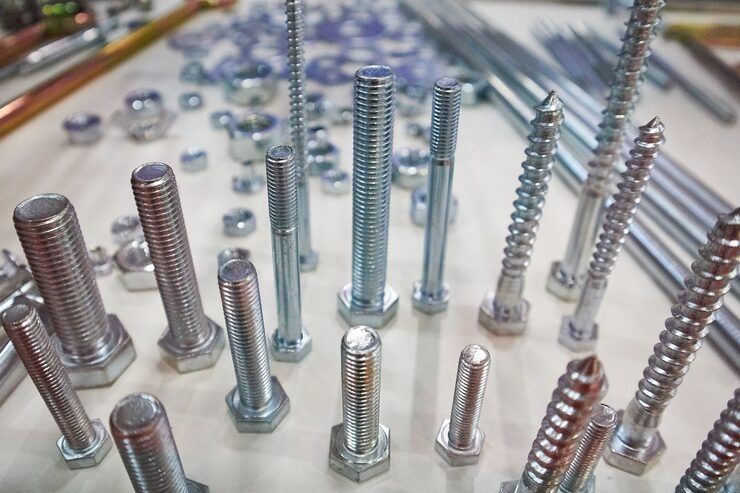
Choosing the right industrial screw involves more than matching thread size. Head design, drive style, material, coating, thread geometry, strength, and application conditions can all affect how reliably a fastener performs.
A clear understanding of industrial screws helps engineers, maintenance teams, manufacturers, and other technical professionals select appropriate fasteners for specific assemblies. The right combination of design and material can improve joint stability, simplify installation, and reduce problems caused by loosening, corrosion, or excessive mechanical stress.
How Industrial Screws Differ From General Fasteners
Industrial screws are designed for applications where fastening performance must remain consistent under demanding operating conditions. Machinery, structural assemblies, production equipment, electrical enclosures, and transportation systems can expose fasteners to vibration, moisture, heat, pressure, or repeated loading.
Unlike a simple fastening application, industrial assemblies may require controlled torque, defined clamping force, specific corrosion resistance, or compatibility with particular materials. A screw used in a precision machine, for example, may have very different requirements from one used in an outdoor structural assembly.
The selection process therefore starts with understanding the joint itself. Engineers consider the materials being joined, expected loads, environmental exposure, access for installation, and whether the connection will need periodic maintenance.
Common Types of Industrial Screws
Different screw designs address different fastening requirements. Understanding their functions makes it easier to match a fastener with the intended application.
Machine Screws
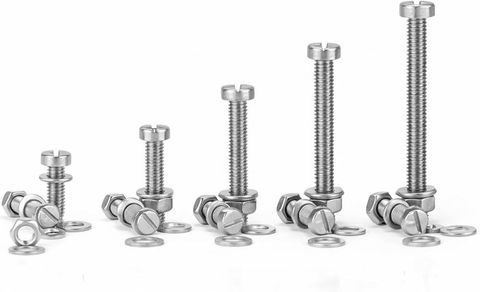
Machine screws are commonly used with threaded holes or nuts in machinery and equipment assemblies. They are typically manufactured with uniform threads and are available in several head configurations.
These screws are frequently found in electrical equipment, mechanical housings, control panels, appliances, and industrial machinery where accurate and repeatable fastening is required.
Self-Tapping Screws
Self-tapping screws form or cut threads as they are driven into a suitable material. This feature can simplify assembly by reducing the need for separately prepared internal threads in some applications.
Their exact design varies depending on whether they are intended for sheet metal, plastic, or other materials. Selecting the appropriate thread profile is important because excessive insertion force can damage softer materials.
Self-Drilling Screws
Self-drilling screws include a drill-point tip that can penetrate certain materials without a separately drilled pilot hole. They are often used in metal fabrication, equipment enclosures, roofing assemblies, and other applications where installation speed is important.
The drilling capability does not eliminate the need to consider material thickness and screw specification. The fastener still needs sufficient strength and suitable geometry for the joint.
Set Screws
Set screws are generally used to secure components such as gears, collars, pulleys, or couplings to a shaft. Rather than joining two broad surfaces, they apply force against the surface of the shaft or another component.
Common point configurations include cup, cone, flat, and dog-point designs. The correct point style depends on whether the connection prioritizes holding force, positioning, or repeatable assembly.
Socket Head Cap Screws
Socket head cap screws have a cylindrical head with an internal hexagonal drive. Their compact head design allows them to generate substantial clamping force while occupying relatively little space.
They are widely used in machinery, tooling, automation equipment, and precision mechanical assemblies where installation access may be limited.
Materials Used in Industrial Screws
Material selection strongly influences screw performance. The ideal material depends on mechanical loading, corrosion exposure, temperature, and compatibility with the joined components.
Carbon steel is widely used when high mechanical strength is required in controlled environments. Alloy steel can provide greater strength and hardness for demanding mechanical applications.
Stainless steel is often selected where corrosion resistance is important. It is particularly useful in humid environments, food-processing equipment, chemical facilities, and outdoor applications, although different stainless grades provide different levels of corrosion resistance and mechanical performance.
Other materials, including brass and specialized alloys, may be appropriate for electrical, decorative, low-friction, or corrosion-sensitive applications. Material choice should always reflect the actual operating environment rather than relying on appearance alone.
Thread Design and Mechanical Performance
Threads determine how a screw engages with a mating material and transfers clamping force. Pitch, diameter, thread form, and engagement length all influence connection performance.
Coarse threads generally provide deeper engagement and can be useful in certain softer materials or applications where rapid assembly is desirable. Fine threads can support greater adjustment precision and may be selected for specific mechanical applications.
Vibration also deserves attention. A threaded joint can lose preload when subjected to repeated dynamic forces, particularly when the joint design or installation method is inadequate. In critical assemblies, engineers may combine the screw with suitable locking methods to maintain joint integrity.
Head and Drive Styles Matter
The head determines how a screw interfaces with the assembly surface, while the drive determines how torque is transferred during installation.
Hex heads work well where wrench access is available, while Phillips, Torx, and internal hex drives are commonly used where compact installation or controlled torque is required.
Head styles also include flat, pan, button, and socket configurations. A flat head can sit flush with the surrounding surface, while a pan or button head may provide a larger bearing surface above the material.
Choosing the wrong drive can lead to tool slippage or drive damage, making installation less reliable.
Industrial Applications
Industrial screws appear across a wide range of sectors because threaded fastening provides a practical way to assemble, maintain, and disassemble equipment.
Common applications include:
- Manufacturing machinery and production equipment
- Automotive and transportation assemblies
- Electrical and electronic enclosures
- Structural metal fabrication
- HVAC and industrial ventilation systems
- Agricultural machinery
- Construction equipment
- Renewable energy installations
- General maintenance and repair operations
Each sector may require different combinations of strength, corrosion resistance, dimensional accuracy, and installation characteristics.
Choosing the Right Screw for an Application
Selecting a suitable screw starts with the joint rather than the fastener itself. The joined materials, expected loads, installation environment, and maintenance requirements should all be considered.
Important factors include screw diameter, length, thread type, material grade, head style, drive configuration, corrosion exposure, and required clamping force.
The installation process matters just as much. Incorrect torque can produce either insufficient clamping or excessive stress. For critical assemblies, documented torque specifications and appropriate calibrated tools help improve fastening consistency.
Standards such as those developed by ISO, ASTM, and other recognized engineering organizations can also provide useful specifications for dimensions, materials, mechanical performance, and testing.
Frequently Asked Questions
What are industrial screws used for?
Industrial screws are used to create secure threaded connections in machinery, equipment, metal assemblies, electrical systems, vehicles, infrastructure, and many other engineered applications.
How do stainless steel screws differ from steel screws?
Stainless steel generally provides better corrosion resistance, while carbon and alloy steels are often selected where mechanical strength and hardness are the primary requirements. The appropriate choice depends on the environment and loading conditions.
What is the difference between self-tapping and self-drilling screws?
A self-tapping screw forms or cuts threads as it enters a prepared opening or suitable material. A self-drilling screw includes a drill-point tip designed to create its own initial hole in compatible materials.
Why is screw torque important?
Torque affects the clamping force created in a threaded joint. Too little torque can leave the connection loose, while excessive torque can damage the screw, threads, or joined materials.
How can industrial screws resist vibration?
Vibration resistance depends on the complete joint design. Appropriate preload, thread engagement, locking features, joint geometry, and installation procedures can all help maintain connection integrity.
Conclusion
Industrial screws are engineered components whose performance depends on much more than size or appearance. Type, thread geometry, head design, drive configuration, material, corrosion resistance, and installation method all influence how effectively a screw performs within an assembly.
Understanding these characteristics makes fastener selection more systematic and helps engineers choose components that match real operating conditions. From precision machinery to structural equipment, properly specified industrial screws provide the dependable threaded connections required for modern mechanical systems.