Plastic products often begin as simple raw materials, yet the manufacturing process behind them involves carefully controlled heat, pressure, and material flow.
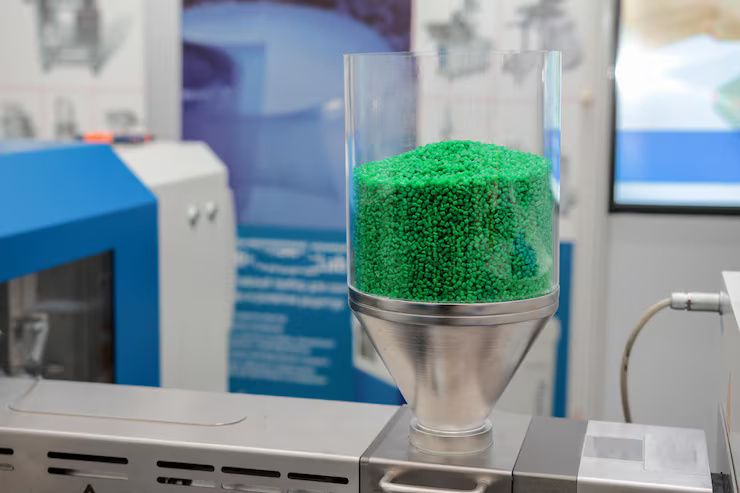
Plastic extrusion technology transforms polymer pellets or resin into continuous shapes such as pipes, films, sheets, tubing, and profiles used across construction, packaging, automotive, and industrial applications.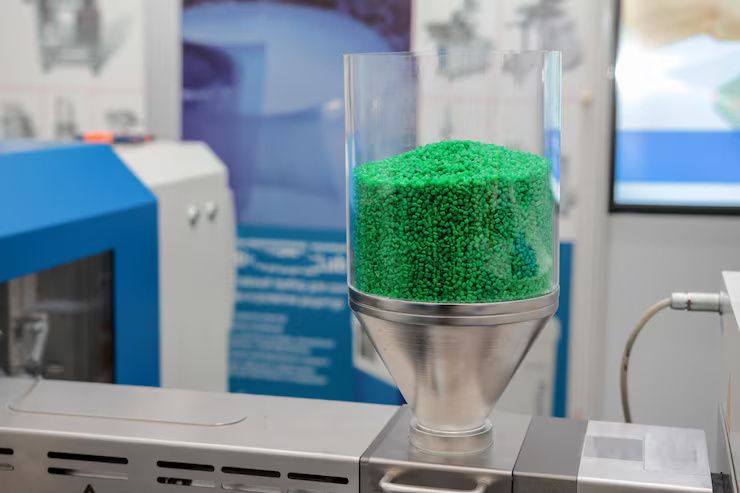
The process remains relevant because manufacturers need consistent dimensions, reliable material performance, and efficient production for products with different shapes and specifications. Advances in process control, material formulation, and equipment design have expanded what extrusion lines can produce.
Understanding how industrial manufacturing works requires looking beyond the extrusion machine itself. The complete process includes material preparation, melting, shaping, cooling, dimensional control, and finishing. Each stage influences the quality and performance of the final product.
How Plastic Extrusion Technology Works
Plastic extrusion is a continuous manufacturing process in which polymer material is melted and pushed through a shaped opening called a die. The die determines the cross-sectional shape of the emerging product.
Most extrusion lines use a single-screw extruder, although twin-screw systems are also common for specific materials and processing requirements. The screw rotates inside a heated barrel, moving material forward while helping generate the pressure and mixing needed for processing.
The basic sequence is:
Polymer material enters the feed section.
The screw conveys and gradually heats the material.
The polymer melts and becomes a continuous flow.
Pressure pushes the melt through the die.
The emerging product is cooled and stabilized.
The finished shape is measured, cut, wound, or otherwise handled.
Unlike injection molding, which produces individual parts inside a mold, extrusion creates a continuous output. This makes it particularly suitable for long products with a consistent cross-section.
The Main Components of an Extrusion Line
An extrusion line is a coordinated system rather than a single machine. Each component performs a specific function in controlling material flow and product dimensions.
Feeding and Material Preparation
The process begins with polymer pellets, powders, or other prepared feedstock. Depending on the material, additives may be blended in to influence flexibility, color, strength, thermal stability, or processing behavior.
Some polymers require drying before extrusion because absorbed moisture can create bubbles, surface defects, or reduced material performance. Feeders must deliver material consistently so that the extruder receives a stable supply.
Screw, Barrel, and Heating Zones
The screw is responsible for conveying, compressing, and mixing the polymer. Its design affects melting behavior, residence time, output, and the amount of shear applied to the material.
The barrel is divided into temperature-controlled zones. Material usually moves through a progression from solid pellets to a molten polymer. Temperature settings must be appropriate for the resin because excessive heat can cause degradation, while insufficient heat may produce incomplete melting.
Die and Downstream Equipment
The die shapes the molten polymer as it leaves the extruder. Die design influences wall thickness, dimensional uniformity, surface quality, and the stability of the emerging profile.
Downstream equipment then cools, calibrates, pulls, cuts, winds, or stacks the product. The exact arrangement depends on whether the line produces film, pipe, sheet, cable coating, or another continuous form.
Different Extrusion Processes for Different Products
Plastic extrusion technology includes several process variations. The main difference is how the material is shaped and how the product is handled after leaving the die.
Sheet and film extrusion produces flat or thin continuous material. Film lines may use specialized dies and cooling systems to control thickness, transparency, and surface characteristics. These products are used in packaging, agriculture, construction, and industrial applications.
Pipe and tubing extrusion creates hollow products. The die forms the outer shape, while internal air pressure, sizing equipment, or calibration systems help maintain the required dimensions. Cooling tanks and haul-off units stabilize the product before cutting or coiling.
Profile extrusion produces complex continuous shapes, including channels, seals, trim, and structural sections. These products may have multiple surfaces or internal features, making die design and dimensional control particularly important.
Co-extrusion combines two or more polymer layers in one product. Different materials can provide separate functions, such as a structural layer combined with a barrier, protective, or appearance layer. This approach allows manufacturers to produce multi-layer products without assembling separate components afterward.
Controlling Heat, Pressure, and Material Flow
The quality of an extruded product depends heavily on process stability. Small changes in temperature, screw speed, pressure, or cooling conditions can affect the final dimensions and appearance.
Temperature control must account for the polymer’s melting behavior and thermal sensitivity. Operators monitor barrel zones, melt temperature, and die temperature to maintain a consistent processing window.
Screw speed influences output rate and the amount of mechanical energy transferred to the material. Increasing speed may raise production throughput, but it can also increase shear, melt temperature, or pressure. The appropriate setting depends on the resin, screw design, and product requirements.
Pressure must remain stable enough to maintain consistent flow through the die. Fluctuations can contribute to variations in thickness, surface defects, or dimensional instability.
Cooling is equally important. If a product cools unevenly, it may shrink, warp, or develop internal stresses. Cooling systems are therefore designed around the geometry and material characteristics of the product.
Quality Control and Dimensional Accuracy
Industrial extrusion requires more than producing a continuous shape. The product must meet dimensional, mechanical, and surface requirements throughout the production run.
Common quality checks include:
Wall thickness and overall dimensions
Surface appearance and consistency
Melt pressure and temperature
Product weight per unit length
Tensile strength or flexibility
Color and layer uniformity
Presence of bubbles, gels, or contamination
Inline measurement systems can monitor dimensions continuously. Depending on the application, manufacturers may use laser gauges, optical inspection, thickness sensors, or other automated systems.
Quality control also begins before production. Resin specifications, moisture levels, additive concentrations, and material handling practices can affect the extrusion process. Consistent input materials make it easier to maintain stable output.
Materials Used in Plastic Extrusion
A wide range of thermoplastics can be processed through extrusion. The material selected depends on the product’s intended environment and performance requirements.
Polyethylene (PE) is widely used for films, pipes, and various profiles because different grades provide useful combinations of flexibility, toughness, and chemical resistance.
Polypropylene (PP) is used in applications requiring low density, chemical resistance, and suitable temperature performance. It can be processed into sheets, films, and other continuous products.
Polyvinyl chloride (PVC) is common in pipes, profiles, cable insulation, and construction-related products. Its formulation can be adjusted for rigid or flexible applications.
Polystyrene (PS) and ABS are used in selected sheet, profile, and specialty extrusion applications. Engineering thermoplastics may also be processed when higher mechanical or thermal performance is required.
Material selection affects processing temperature, screw design, cooling behavior, and final product properties. A resin cannot be chosen solely by its general category; the specific grade and formulation matter.
Industrial Applications and Production Considerations
Plastic extrusion supports many industries because it can produce continuous products with repeatable dimensions. Construction uses include pipes, window profiles, insulation layers, and protective membranes. Packaging applications include films, sheets, and barrier structures.
Automotive and electrical manufacturing use extrusion for tubing, seals, wire coatings, and protective components. Industrial equipment may incorporate extruded profiles, gaskets, guides, and other shaped polymer parts.
Production planning must consider more than machine output. Material availability, die changes, cleaning requirements, cooling capacity, and downstream handling all influence the practical efficiency of an extrusion line.
When a product design changes, the die may need modification or replacement. This can affect setup time and process stability. Manufacturers therefore evaluate product geometry, material compatibility, and dimensional tolerances before selecting equipment.
Common Challenges in Extrusion Manufacturing
Extrusion problems often arise when material behavior and machine settings are not properly matched. Die swell, for example, occurs when the polymer expands after leaving the die. The effect must be considered when designing tooling and setting dimensional controls.
Other challenges include melt fracture, uneven cooling, poor dispersion of additives, surface contamination, and inconsistent feeding. These issues may appear as rough surfaces, dimensional variation, discoloration, or weak sections.
Troubleshooting usually requires examining the entire process rather than changing one setting immediately. Operators may review material moisture, temperature profiles, screw speed, melt pressure, die condition, and cooling performance to identify the underlying cause.
Preventive maintenance also matters. Wear on screws, barrels, dies, and downstream components can gradually affect output and product quality. Regular inspection helps identify problems before they become major production interruptions.
Frequently Asked Questions
What is plastic extrusion technology used for?
Plastic extrusion technology is used to manufacture continuous products such as pipes, films, sheets, tubing, cable coatings, and profiles with consistent cross-sectional shapes.
How does a plastic extruder melt polymer material?
A rotating screw moves polymer through a heated barrel. Heat from the barrel and mechanical energy generated by the screw help transform the material into a molten flow.
What is the difference between extrusion and injection molding?
Extrusion produces continuous shapes through a die, while injection molding fills a mold to create individual parts. The two processes serve different product geometries and production requirements.
Why is cooling important in plastic extrusion?
Cooling stabilizes the emerging polymer and helps maintain its dimensions. Uneven or insufficient cooling can cause shrinkage, warping, or other defects.
What factors affect extrusion product quality?
Material properties, moisture, temperature, screw speed, melt pressure, die design, cooling conditions, and downstream handling all influence the final product.
Conclusion
Plastic extrusion technology is a carefully coordinated manufacturing process that converts polymer materials into continuous products through controlled melting, shaping, and cooling. Its effectiveness depends on the interaction between material selection, equipment design, process settings, and quality control.
From pipes and films to complex industrial profiles, extrusion remains valuable because it can produce consistent shapes at scale. Understanding the complete process helps explain how manufacturers manage dimensional accuracy, material performance, and production reliability.