Plastic bottles are the result of careful engineering rather than simply molded containers. Their shape, material, wall thickness, neck design, and production method must work together to create packaging that can safely hold its contents and withstand handling throughout its intended use.
Plastic bottle manufacturing supports a wide range of industries, including beverages, food, personal care, pharmaceuticals, household products, and industrial chemicals. Each application brings different requirements for strength, flexibility, chemical resistance, appearance, and compatibility with filling equipment.
Understanding how bottles are designed and produced provides a clearer view of the manufacturing process. From selecting the polymer and developing the initial design to molding, inspection, and finishing, every stage influences the quality and performance of the finished container.
How Bottle Design Influences Manufacturing
Bottle design begins with the purpose of the container. Engineers consider what the bottle will contain, how it will be handled, how it will be transported, and what type of closure will be used.
The contents can have a major influence on the design. A carbonated beverage container needs to manage internal pressure, while a bottle intended for household chemicals may require greater resistance to the contents. Pharmaceutical packaging can involve additional requirements for cleanliness, dimensional consistency, and material compatibility.
Shape also affects usability. Curved surfaces, grips, shoulders, bases, and dispensing features can influence how easily a container is held or poured. At the same time, the design must remain suitable for the selected molding process.
The neck finish receives particular attention because it connects the bottle with the closure. Thread dimensions, sealing surfaces, and tolerances must be controlled so the cap or dispensing component fits correctly.
Selecting Materials for Different Bottle Applications
The choice of plastic affects nearly every stage of production. Different polymers provide different combinations of strength, clarity, flexibility, chemical resistance, barrier performance, and processing characteristics.
Polyethylene terephthalate (PET) is widely used for beverage and food packaging. It can provide clarity, stiffness, and relatively low weight, making it suitable for many transparent containers.
High-density polyethylene (HDPE) is commonly used for containers that need durability and chemical resistance. It appears in applications such as personal care packaging, household products, and various industrial containers.
Polypropylene (PP) can be appropriate for packaging that benefits from its particular mechanical and thermal characteristics. Other polymers may be selected when specialized performance requirements make them more suitable.
Plastic typically arrives at the manufacturing facility as resin pellets. Before processing, manufacturers must manage storage and material preparation carefully. Moisture, contamination, or inconsistent material conditions can affect molding behavior and finished-product quality.
Turning Plastic Resin Into a Bottle
The production route depends on the type of bottle and polymer being processed. Two important approaches are injection stretch blow molding and extrusion blow molding.
For many PET containers, manufacturing starts with an injection-molded preform. The preform is a small, thick-walled plastic component that already contains the material needed for the finished bottle.
After the preform is produced, it is reheated to a carefully controlled temperature. It is then stretched and expanded inside a bottle mold using mechanical movement and compressed air. The plastic conforms to the mold, creating the final container shape.
Extrusion blow molding uses a different sequence. Heated plastic is pushed through a die to form a hollow tube called a parison. A mold closes around the softened parison, and air pressure expands the material against the mold walls.
The two processes have different equipment requirements and are suited to different combinations of materials, shapes, and production requirements.
How Blow Molding Forms the Final Container
Blow molding requires precise control because the plastic must distribute across the mold correctly. Uneven distribution can create weak areas, dimensional problems, or unnecessary material thickness.
In stretch blow molding, the preform is stretched in controlled directions while air pressure expands it. The relationship between temperature, stretching, pressure, and cooling influences the final properties of the bottle.
The mold determines the external geometry. It can define the body shape, shoulder profile, base configuration, grip areas, and other design features.
Once the plastic reaches the mold surface, cooling allows it to stabilize. The finished bottle can then be removed and transferred to subsequent inspection or handling stages.
Production parameters are closely monitored because changes in temperature, pressure, timing, or material behavior can affect consistency across large production runs.
Why Wall Thickness and Material Distribution Matter
A bottle's performance depends heavily on how plastic is distributed throughout its structure. Uniformity is desirable, but different sections may require different amounts of material depending on their mechanical demands.
The base, shoulder, corners, and neck can experience different stresses during manufacturing, filling, transportation, and use. Engineers therefore design the container to place material where it contributes most effectively to structural performance.
Lightweighting has also become an important design consideration. Reducing unnecessary material can improve resource efficiency, but excessive reduction can weaken the container or make it unsuitable for the intended application.
Manufacturers use process controls and inspection systems to monitor these characteristics. Depending on the application, measurements can include bottle weight, dimensions, wall thickness, and mechanical performance.
What Happens After the Bottle Is Molded?
Molding produces the main container, but additional operations may be necessary before the bottle enters a filling or packaging line.
Parting lines or excess material created during some molding processes may require trimming. The neck area may also undergo close inspection because it determines how the finished container interacts with the closure.
Labels, printed information, sleeves, and other identification features can be applied during later stages. These processes must be compatible with the bottle's surface and intended handling conditions.
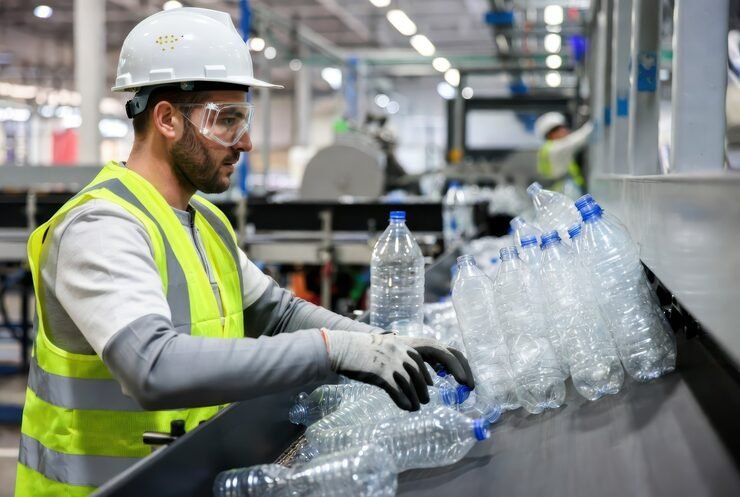
The container may then be transferred into automated systems for filling, capping, labeling, inspection, and packing. Consistent bottle dimensions are essential because modern packaging lines depend heavily on automated handling.
A small dimensional variation can become a production issue when thousands of containers pass through high-speed equipment. This makes dimensional control important even when a bottle appears visually acceptable.
Quality Control Across the Production Process
Quality control begins with the incoming material and continues throughout manufacturing. Checking only the finished product would not provide enough information about where process variation originates.
Manufacturers may evaluate several characteristics, including:
- Bottle weight and dimensions
- Neck and closure specifications
- Wall-thickness distribution
- Surface appearance
- Leakage resistance
- Structural strength
- Material contamination
- Overall molding consistency
Automated vision systems can identify certain surface and dimensional defects at production speed. Other tests can evaluate mechanical characteristics or determine how containers respond to controlled stresses.
The level of testing depends on the application. Packaging intended for regulated industries can require additional controls, documentation, and manufacturing procedures compared with general-purpose containers.
Designing Bottles for Efficient Production
A successful bottle design must perform well beyond the drawing or computer model. It must also be practical to manufacture consistently.
Engineers consider mold geometry, material flow, cooling, machine capabilities, cycle conditions, and compatibility with downstream equipment. A complicated shape may create additional manufacturing challenges if it makes material distribution difficult or slows automated handling.
Production efficiency also depends on consistency. Bottles need to move reliably through conveyors, filling equipment, capping machines, labeling systems, and inspection stations.
For this reason, bottle design and manufacturing engineering are closely connected. Changes to dimensions or geometry can influence molding behavior, material use, machine performance, and packaging-line operation.
Material Efficiency and Recycling Considerations
Sustainability is increasingly influencing bottle design and production. One approach is lightweighting, where engineers reduce unnecessary material while maintaining the structural properties required for the application.
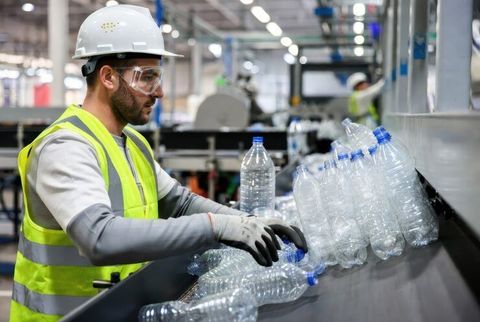
Recycled resin can also be incorporated into suitable packaging systems. Recycled PET, for example, can be used in applications where the material meets the required performance and regulatory conditions.
The design of the complete package can also influence its recyclability. Material combinations, labels, closures, colors, and additional components can interact with recycling processes differently.
This means material efficiency is not simply a question of using less plastic. Designers increasingly need to consider the entire packaging system, including production, use, collection, processing, and potential material recovery.
How Manufacturing Technology Continues to Develop
Modern plastic bottle manufacturing increasingly combines molding technology with automation, sensors, process monitoring, and automated inspection.
More precise control can help manufacturers maintain consistent temperatures, pressures, cycle times, and material distribution. Automated inspection can identify defects while production is underway rather than relying entirely on manual checks.
Digital process monitoring also helps manufacturers understand how changes in production conditions affect the finished container. This supports more consistent manufacturing and can help identify process deviations earlier.
At the design level, computer-based modeling allows engineers to assess bottle geometry and material behavior before committing to full-scale production. This connection between digital design, molding equipment, and quality control is becoming increasingly important in high-volume packaging operations.
Frequently Asked Questions
What plastic is commonly used for bottles?
PET and HDPE are two widely used materials, although polypropylene and other polymers are also used for specific applications. The appropriate material depends on factors such as product compatibility, strength, clarity, flexibility, and processing requirements.
How are PET bottles manufactured?
Many PET bottles begin as injection-molded preforms. These preforms are reheated and placed into bottle molds, where stretching and compressed air expand the material into the final container shape.
What is the difference between blow molding and injection molding?
Injection molding forces molten plastic into a mold to create a defined component, such as a PET preform. Blow molding then uses air pressure to expand softened plastic against a mold to create a hollow container.
Why is bottle wall thickness important?
Wall thickness affects strength, weight, durability, and material efficiency. Manufacturers aim to distribute material appropriately so the bottle can withstand the demands of filling, handling, transportation, and use.
Can plastic bottles contain recycled material?
Yes, certain bottles can incorporate recycled plastic when the material meets the technical, safety, quality, and regulatory requirements of the intended application. The appropriate amount and type of recycled content depend on the packaging system.
Conclusion
Plastic bottle manufacturing combines material science, product engineering, molding technology, and quality control. The finished container is shaped by decisions made throughout the process, from selecting the polymer and designing the geometry to controlling molding conditions and inspecting the final product.
The most effective bottle designs balance functionality, manufacturability, material efficiency, and compatibility with downstream packaging operations. As production technology develops, greater process control and more thoughtful material use are helping manufacturers create containers that meet increasingly demanding performance and sustainability requirements.