Temperature affects nearly every stage of industrial production, from chemical processing and food manufacturing to equipment operation and material storage.
Industrial temperature monitoring systems help businesses measure thermal conditions, identify abnormal changes, and maintain operating environments within defined limits.
As industrial facilities adopt automated equipment and connected control systems, temperature monitoring has become an important part of operational reliability. Accurate measurements help operators detect overheating, protect sensitive materials, reduce equipment stress, and maintain consistent product quality.
Understanding these systems involves more than choosing a temperature sensor. Sensor technology, installation location, measurement accuracy, data transmission, alarm configuration, and maintenance all influence how effectively a monitoring system performs.
How Industrial Temperature Monitoring Systems Work
An industrial temperature monitoring system measures thermal conditions at selected points across a facility, machine, production line, or storage environment. Depending on the application, measurements may be collected continuously, at scheduled intervals, or when specific operating conditions occur.
The system typically includes a temperature sensor, a signal-processing component, a data transmission method, and a monitoring interface. The sensor detects temperature changes and converts them into an electrical signal or another measurable output. A transmitter or controller then processes the signal so that operators or automated systems can interpret it.
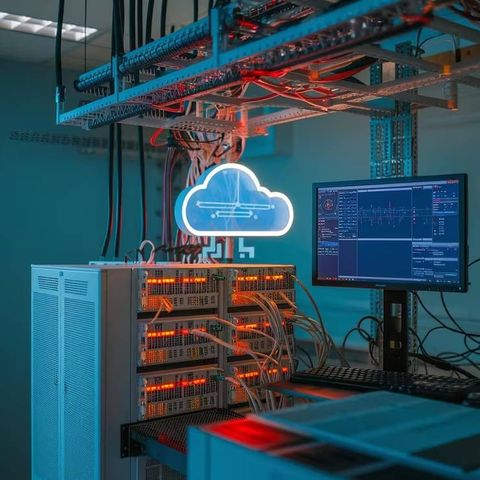
Many facilities connect temperature monitoring equipment to a programmable logic controller (PLC), supervisory control and data acquisition (SCADA) platform, distributed control system (DCS), or industrial Internet of Things (IIoT) platform. This allows temperature readings to appear alongside other operational information.
When measurements move outside configured limits, the system can generate an alarm or trigger an appropriate control response. However, monitoring and automatic control are not identical. A monitoring system reports conditions, while a control system actively adjusts equipment to maintain a target temperature.
Selecting the Right Temperature Sensor
The sensor is the foundation of any temperature monitoring system. Different technologies provide different measurement ranges, response characteristics, installation options, and levels of accuracy.
Thermocouples for High-Temperature Environments
Thermocouples use the voltage produced at the junction of two different metals to estimate temperature. They are widely used in industrial applications because many types can tolerate high temperatures and demanding operating conditions.
Manufacturers use thermocouples in furnaces, kilns, heat-treatment equipment, engines, and industrial ovens. Different thermocouple types have different operating ranges and material characteristics, so the correct selection depends on the process temperature and surrounding environment.
Thermocouples can respond quickly to temperature changes, particularly when the sensing junction has a suitable design. However, measurement accuracy depends on factors such as calibration, reference-junction compensation, wiring, and installation.
Resistance Temperature Detectors for Precision
Resistance temperature detectors (RTDs) measure temperature through the predictable change in electrical resistance of a sensing material. Platinum RTDs are commonly used when stable and accurate temperature measurements are required.
They are suitable for applications such as pharmaceutical production, food processing, laboratory equipment, and industrial process control. Their performance makes them useful where relatively small temperature deviations matter.
RTDs may respond more slowly than some thermocouples, depending on their construction and protective housing. Their installation must also account for lead-wire resistance, vibration, moisture, and the temperature range of the specific sensor.
Thermistors for Sensitive Measurements
Thermistors use the temperature-dependent resistance of semiconductor materials. Many thermistors provide high sensitivity over a relatively narrow temperature range, making them useful for equipment monitoring and localized temperature measurement.
They are often found in electronic equipment, battery systems, HVAC installations, and compact industrial devices. Their suitability depends on the operating range, required accuracy, response time, and environmental conditions.
Unlike many industrial thermocouples, standard thermistors are generally not the first choice for extremely high-temperature environments. Selecting a sensor based on its actual operating characteristics is more reliable than choosing one solely because it is inexpensive or readily available.
Infrared Sensors for Non-Contact Measurement
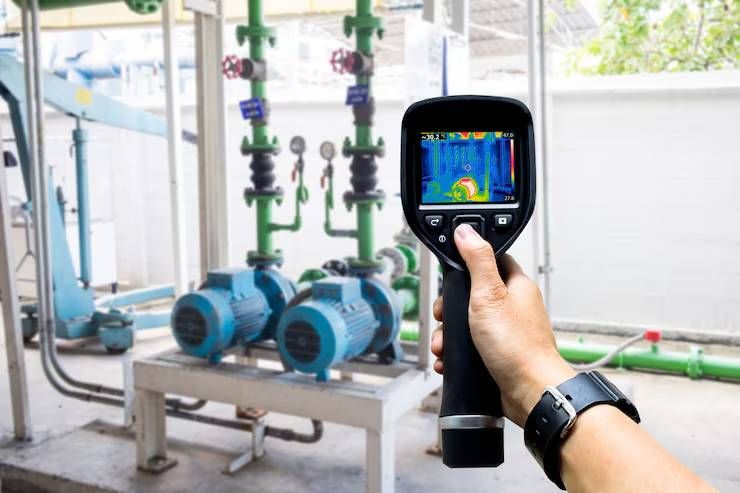
Infrared temperature sensors estimate surface temperature by detecting thermal radiation emitted by an object. Because they do not need physical contact, they can monitor moving products, hot surfaces, rotating machinery, and objects that are difficult to reach safely.
Their performance depends on factors such as surface emissivity, viewing distance, field of view, and interference from dust, steam, or other environmental conditions. Reflective metal surfaces can be particularly challenging because their apparent infrared temperature may differ from their actual surface temperature.
Non-contact measurement is useful when contact sensors would interfere with production or wear out quickly. However, it generally measures surface temperature rather than the internal temperature of a material.
Where Industrial Temperature Monitoring Is Used
Temperature monitoring supports different operational objectives depending on the industry. The same sensor technology may be applied differently according to the material, equipment, and consequences of a temperature deviation.
Manufacturing and machinery: Motors, bearings, gearboxes, hydraulic systems, and electrical cabinets can develop abnormal heat when components experience excessive friction, overload, restricted cooling, or other faults. Monitoring helps maintenance teams identify unusual patterns before they develop into more serious problems.
Food and beverage processing: Temperature affects processing consistency, storage conditions, and product safety. Monitoring can support heating, cooling, refrigeration, pasteurization, and cold-storage operations. Specific applications require suitable measurement procedures and documented temperature limits.
Chemical and pharmaceutical production: Many chemical reactions depend on controlled temperatures, while pharmaceutical manufacturing may require tightly managed environmental and process conditions. Monitoring supports process consistency and helps identify deviations that require investigation.
Energy and utilities: Boilers, turbines, transformers, pipelines, and other equipment operate under thermal conditions that influence efficiency and reliability. Temperature measurements can help operators detect abnormal heating and evaluate equipment performance.
Warehousing and cold-chain logistics: Temperature monitoring helps maintain specified storage conditions for temperature-sensitive goods. Connected systems can record readings over time and alert staff when conditions move outside approved ranges.
These applications demonstrate why monitoring requirements should be defined by the process rather than by the sensor alone.
Connecting Sensors to Industrial Monitoring Platforms
Modern monitoring systems often combine sensors with communication networks and software dashboards. The connection method determines how measurements reach operators and how easily the system can integrate with existing equipment.
In conventional installations, wired sensors transmit signals to local controllers or data acquisition systems. Common interfaces include industrial analog signals such as 4–20 mA, thermocouple and RTD input modules, and digital communication protocols.
More connected environments may use industrial Ethernet, fieldbus networks, wireless sensor networks, or IIoT gateways. Wireless monitoring can be useful for rotating assets, remote locations, and facilities where installing cables is difficult. However, battery life, radio interference, network coverage, and communication reliability must be considered.
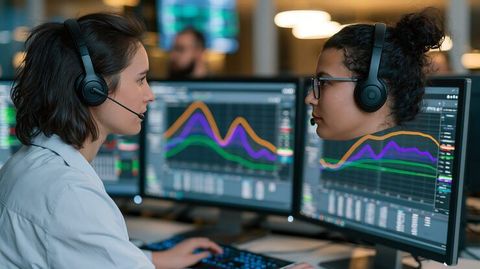
SCADA and industrial data platforms can display real-time readings, historical trends, alarms, and equipment status. Reviewing historical data helps operators distinguish normal operating cycles from gradual temperature changes that may indicate developing faults.
Installation, Calibration, and Measurement Accuracy
Even a high-quality sensor can produce misleading readings when installed incorrectly. The sensor must measure a temperature that represents the condition the operator actually needs to understand.
For example, a sensor positioned too close to a cooling inlet may record a lower temperature than the surrounding equipment experiences. In a flowing process, poor immersion depth or an unsuitable protective thermowell can also affect response time and measurement accuracy.
Calibration checks help determine whether the instrument's readings remain within acceptable tolerances. The required frequency depends on the sensor type, operating conditions, application risk, manufacturer recommendations, and relevant quality requirements.
Maintenance teams should also inspect wiring, connectors, protective housings, and transmitter settings. Corrosion, vibration, moisture, electrical interference, and physical damage can all affect measurement reliability.
When temperature measurements support product release, process validation, or regulatory compliance, calibration records and documented procedures become particularly important.
Using Temperature Data to Prevent Equipment Problems
Temperature monitoring becomes more valuable when readings are interpreted over time rather than treated as isolated numbers. A gradual rise in bearing temperature, for instance, may indicate a developing mechanical issue even when the current reading remains below an alarm threshold.
Predictive maintenance programs can combine temperature trends with vibration, pressure, current, or other condition-monitoring data. This provides a broader view of equipment health and helps maintenance teams prioritize inspections.
Alarm thresholds should reflect the equipment's operating limits and normal behavior. Excessively sensitive alarms can create notification fatigue, while thresholds that are too broad may delay the detection of genuine problems.
For critical processes, monitoring systems should also account for sensor failure, communication loss, and implausible readings. Clear fault indicators help operators distinguish an actual temperature change from a malfunctioning measurement channel.
Frequently Asked Questions
Which temperature sensor is best for industrial use?
There is no single best sensor for every application. Thermocouples suit many high-temperature processes, RTDs support accurate and stable measurements, thermistors offer sensitivity within suitable ranges, and infrared sensors measure surface temperature without contact.
How often should industrial temperature sensors be calibrated?
Calibration frequency depends on the application, sensor performance, operating environment, and required measurement accuracy. Critical processes may require more frequent verification and documented calibration procedures.
Can temperature monitoring systems detect equipment failure?
They can help identify abnormal heating and developing performance issues. However, temperature data alone may not reveal every fault, so combining it with other condition-monitoring measurements can improve diagnosis.
What is the difference between temperature monitoring and temperature control?
Monitoring measures and reports temperature conditions. Temperature control uses a controller and suitable equipment, such as heaters or cooling systems, to adjust the process toward a target value.
Are wireless temperature monitoring systems reliable for industrial facilities?
They can be reliable when network coverage, interference, battery life, and communication requirements are properly managed. Critical applications may require additional safeguards or wired connections.
Conclusion
Industrial temperature monitoring systems help facilities maintain process consistency, protect equipment, and identify abnormal operating conditions. Their effectiveness depends on selecting suitable sensors, installing them correctly, integrating reliable data transmission, and maintaining accurate measurements.
By combining appropriate instrumentation with useful alarms, historical analysis, and preventive maintenance practices, organizations can make better operational decisions. The goal is not simply to measure temperature, but to turn dependable measurements into timely and meaningful action.