Heavy fiber laser sheet metal processing has become an important part of modern metal fabrication, particularly where thick plates, structural components, and demanding production requirements are involved.
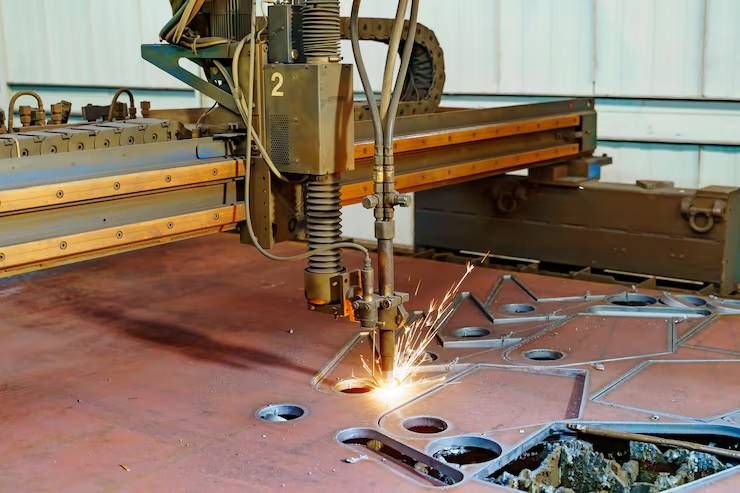
Fiber laser systems use a concentrated beam of light to generate enough energy at the material surface to melt or vaporize a controlled cutting path.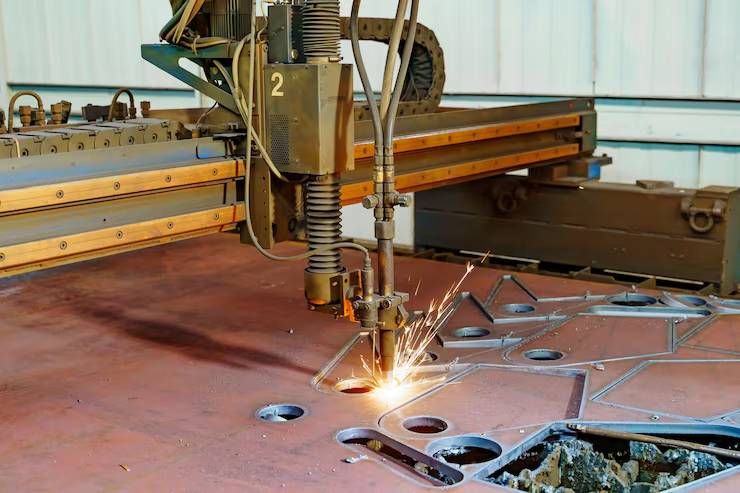
The technology is increasingly relevant as manufacturers seek greater process consistency across different material grades and thicknesses. Modern systems combine high-power laser sources with motion controls, assist gases, automated focusing, and process monitoring to handle demanding sheet metal applications.
Understanding how heavy fiber laser cutting works requires more than looking at laser power alone. Material composition, thickness, beam quality, nozzle selection, cutting speed, assist-gas pressure, thermal behavior, and machine configuration all influence the finished result.
How Fiber Laser Cutting Handles Heavy Sheet Metal
Fiber laser cutting uses a solid-state laser source in which the beam is generated and transmitted through optical fiber. The focused beam concentrates energy into a small area, raising the metal rapidly to a temperature where it melts. An assist gas then helps remove molten material from the kerf.
For heavy sheet metal, the process becomes more demanding because a thicker workpiece requires greater energy penetration and more effective removal of molten material. Increasing laser power can help, but it does not independently determine whether a particular thickness can be cut effectively.
The optical system must maintain an appropriate focal position, while the cutting head needs to remain stable as it moves across the workpiece. Machine rigidity and motion accuracy become increasingly relevant as plate thickness increases.
Common materials processed with fiber lasers include carbon steel, stainless steel, aluminum, and certain alloyed metals. Each material responds differently because its thermal conductivity, reflectivity, melting behavior, and surface condition vary.
What Makes Heavy-Duty Fiber Laser Processing Different?
Thin-sheet laser cutting can operate at relatively high speeds because the beam has a shorter distance through the material. Heavy material introduces a deeper cutting zone, requiring careful management of heat and molten-metal evacuation.
One major consideration is kerf formation. The kerf is the narrow channel created by the cutting beam. Its geometry can change with material thickness, focus position, gas flow, and cutting parameters.
Another consideration is heat accumulation. When processing large or thick components, excessive thermal input can contribute to distortion or changes in the cut edge. Proper sequencing and parameter selection help distribute heat more effectively.
The cutting head also plays a significant role. Modern heads can incorporate automatic height sensing, capacitive detection, protective windows, and dynamic focusing functions. These features help maintain the correct relationship between the laser optics and the material surface.
Key Elements of a Modern Cutting System
A heavy fiber laser installation is an integrated process rather than simply a powerful laser source. Several systems work together to produce a controlled cut.
The laser source determines available optical power and contributes to beam characteristics. Higher power can expand the range of material thicknesses that a system can process, but actual capability depends on the complete machine configuration.
The cutting head focuses the beam and directs it toward the workpiece. Its optical components must withstand demanding operating conditions while maintaining beam quality.
The assist-gas system supplies gases such as oxygen or nitrogen, depending on the material and desired cutting characteristics. Gas selection influences oxidation, edge appearance, cutting stability, and material removal.
The motion-control system moves the cutting head along programmed paths. Accurate positioning and acceleration control are particularly important when components contain holes, corners, narrow features, or complex contours.
Finally, the control software coordinates cutting parameters, motion, focus position, gas settings, and other process variables. Integrated automation can reduce operator intervention and improve repeatability across production batches.
Modern Methods for Improving Cutting Performance
Modern fiber laser processing increasingly relies on coordinated process control rather than manual adjustment of individual parameters.
Adaptive Focus Control
The focal position influences how energy is distributed through the material. In heavy cutting, maintaining an appropriate focus location can help achieve stable penetration and consistent kerf geometry.
Some advanced systems can adjust focus automatically according to programmed material and thickness parameters. This reduces the need for repeated manual setup.
High-Pressure Assist Gas
Assist gas performs two important functions: it interacts with the cutting process and helps eject molten material from the kerf. Pressure requirements depend on the material, thickness, nozzle configuration, and cutting strategy.
Oxygen can support an exothermic reaction when cutting certain steels, adding heat to the process. Nitrogen is often used where minimizing oxidation is important, particularly for stainless steel and applications where the edge needs a cleaner appearance.
Piercing Optimization
Before cutting a contour, the laser must usually pierce through the material. Piercing heavy plate can place considerable thermal and mechanical demands on the cutting system.
Modern controls can use staged piercing strategies, including changes in power, focus, and gas conditions. Optimizing this initial stage can reduce piercing time and help protect the cutting head from excessive molten material.
Automated Parameter Control
Material databases and process libraries allow operators to select predefined parameters based on material type and thickness. More advanced systems can adjust settings dynamically during production.
This approach helps maintain consistency when processing multiple components with different geometries.
Edge Quality Depends on More Than Laser Power
A common misconception is that a higher-power laser automatically produces a better cut. In practice, edge quality depends on the interaction of several variables.
Cutting speed that is too high can prevent sufficient penetration, while excessively slow movement can increase heat input. Incorrect focus can produce unstable cutting or excessive dross. Poor nozzle alignment can also disturb the assist-gas flow.
The resulting edge may show characteristics such as striations, dross, excessive taper, or roughness. Operators therefore evaluate the cut surface rather than relying solely on machine power specifications.
For structural fabrication, the required edge quality may differ from that required for precision components. The appropriate process is determined by the intended application, material characteristics, dimensional requirements, and downstream operations.
Managing Heat and Material Distortion
Heavy sheet metal contains substantial thermal mass, but that does not eliminate distortion. Localized heating can still create stresses as the material expands and contracts during cutting.
Cutting sequence is therefore an important production consideration. Components may be arranged so that heat is distributed across the workpiece rather than concentrated repeatedly in one region.
Small internal features can also be sequenced carefully to prevent unwanted movement. For large plates, support configuration and material handling can influence stability during processing.
When dimensional accuracy is critical, manufacturers may also consider how the plate was produced, stored, and handled before cutting. Residual stresses in the material can influence its behavior after sections are separated.
Where Heavy Fiber Laser Processing Is Used
Heavy-duty fiber laser cutting is relevant across several industrial applications where thick metal components require accurate profiles.
Typical applications include:
- Structural steel components
- Heavy equipment fabrication
- Industrial machinery frames
- Agricultural equipment
- Transportation components
- Energy-sector structures
- General plate fabrication
- Custom metal assemblies
The technology is particularly useful when a component requires complex two-dimensional profiles that would otherwise require several machining or thermal-cutting operations.
Fiber laser cutting can also prepare parts for subsequent processes such as bending, welding, drilling, or assembly. The quality of the cut therefore affects the efficiency of later manufacturing stages.
Safety and Process Control Considerations
Heavy fiber laser systems require controlled operating environments because they combine high optical energy, moving machinery, hot material, and pressurized gases.
Appropriate machine guarding, interlocks, ventilation, extraction, and operator training are essential. The cutting area should be configured according to the laser classification and applicable workplace safety requirements.
Material handling also deserves attention. Heavy plates can create mechanical hazards even when the laser itself is operating correctly. Loading equipment, workholding systems, and automated material movement should be matched to the weight and dimensions of the workpieces.
Regular inspection of optics, nozzles, protective windows, gas systems, and mechanical components helps maintain stable processing conditions.
Choosing the Right Cutting Approach
The appropriate heavy fiber laser process depends on the complete manufacturing requirement rather than one specification.
Important factors include material type, plate thickness, required dimensional accuracy, edge requirements, component geometry, production volume, and downstream fabrication steps.
A high-power system may provide greater processing capability, but the practical result depends on beam quality, cutting-head design, assist-gas delivery, motion control, software, and parameter optimization.
For that reason, modern heavy sheet metal processing increasingly treats the laser as one component of a coordinated manufacturing system. Successful results come from matching the complete process to the material and application.
Frequently Asked Questions
What materials can heavy fiber lasers cut?
Fiber lasers are commonly used for carbon steel, stainless steel, aluminum, and various metal alloys. The practical thickness range depends on the specific material and machine configuration.
Does higher laser power always mean faster cutting?
No. Laser power is only one factor. Material properties, thickness, assist gas, focus position, nozzle design, cutting speed, and machine dynamics all influence performance.
Why is assist gas important in laser cutting?
Assist gas helps remove molten material from the kerf and can influence cutting speed, edge condition, oxidation, and process stability. The appropriate gas depends on the material and application.
Can fiber lasers cut very thick metal plate?
Yes, modern high-power fiber laser systems can process substantially thicker material than earlier low-power systems. However, the achievable thickness depends on the complete machine and process configuration rather than laser power alone.
Conclusion
Heavy fiber laser sheet metal processing combines concentrated optical energy, precise motion control, assist-gas management, and automated process parameters to produce controlled cuts in demanding metal applications. Modern systems have expanded the practical range of laser processing while improving repeatability and process control.
The most effective cutting method depends on the interaction between material properties, thickness, machine configuration, cutting parameters, and the required finished condition. Understanding those relationships is essential for achieving reliable results in heavy metal fabrication.